
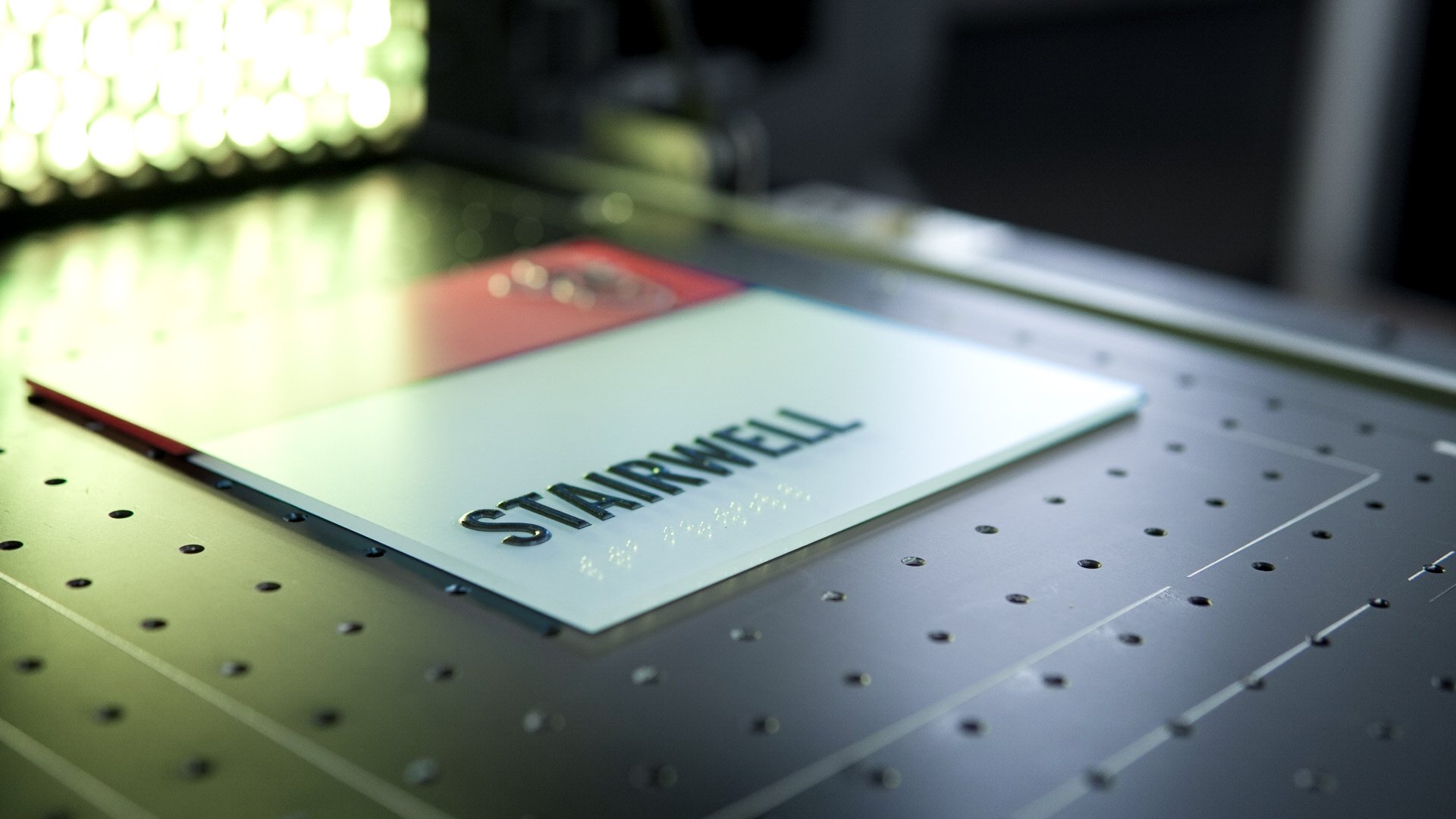
You've completed the signage for your new facility. Yet, even with a successful installation, you know your job isn't over. ADA compliance is a long-term commitment. A single, overlooked detail could unravel your hard work months down the line.
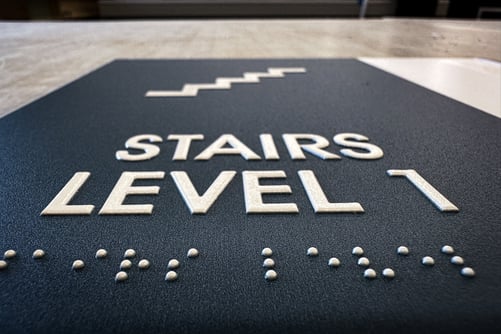
They are a fundamental element of a building’s infrastructure. Essential for everyone from visitors, students, to patients. Every type of sign matters. From those with Braille and tactile characters, to those that identify key locations.
Over time, these signs become part of the background. They are always there and you never think about them. Until a state accessibility investigator calls with a formal complaint. An initial investigation could cost your organization $55,000 - $75,000. What seemed like a simple detail has now become a serious problem.
Clear reliable ADA signs are not a luxury; they are a necessity for all public spaces.
Quality ADA signs ensure people can move through your building safely, with confidence. They are a visible testament to your commitment to accessibility. Making your entire facility more welcoming and professional.
In this article, you'll explore the real-world impact of worn-out signs. And learn how to navigate the maze of compliance. You will also discover how innovative 3D-printing technology creates a more durable solution. Helping you prevent these costly issues for good.
The Hidden Risk in Your Hallways
In the complex world of facility management, a sign is rarely an afterthought. You work with certified professionals to get it right. Even the highest quality signs can be vulnerable to long-term wear and tear.
A sign might be made with components that peel or fade in direct sunlight. It might be subject to constant touch, cleaning, and daily use. This degrades its tactile features. When these things happen, the human impact is immediate.
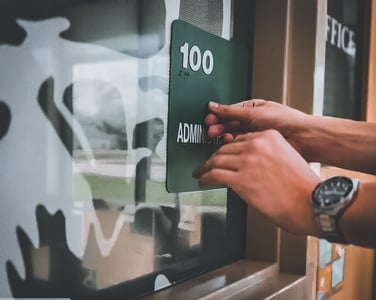
Imagine a visitor who, despite a perfectly placed sign, cannot find a room because a Braille dot has gone missing. This isn't just an inconvenience; it can create stress, confusion, and feelings of exclusion.
Consider a patient in a large hospital who relies on tactile lettering. They struggle to find a critical appointment because the characters have faded. These moments of failure can harm your institution's reputation. Suggesting a lack of long-term care and attention to the details that matter most.
ADA Sign Rules Are a Maze
You understand better than anyone that ADA rules are complex and continuously evolving. This isn't about simply knowing a few rules; it's about navigating a maze of meticulous detail.
The law requires precise attention to tactile characters and Braille. Characters must be sans-serif, uppercase, and raised a minimum of 1/32 of an inch. Fonts are regulated, and the "O" must fall within a specific width-to-height ratio.
You also know that placement is just as important as the sign itself. Tactile signs must be mounted on the latch side of a door. The base of the characters positioned exactly between 48 and 60 inches from the floor.
For a person who relies on touch, this precise location is non-negotiable. Braille itself is a highly regulated detail. From the use of Grade 2 Braille to the specific size and distance of the dots. And a sign’s finish must be non-glare with a high contrast ratio for those with low vision.
These regulations are a professional challenge. Small oversights can lead to big problems.
A Durable Solution That Lasts
This is where a new 3D printing technology offers added value to your existing solutions. The problem with traditional signs is often their construction. Where small plastic Braille dots or tactile symbols are glued onto a flat surface.
These glued components are weak points. Vulnerable to peeling, cracking, or being picked off by curious children over time. They are not built for the long term.
Here at FASTSIGNS, a 3D printer offers a new and lasting way to build signs. We're introducing the MUTOH XPJ-661UF. A machine that acts less like a printer and more like a careful builder. Instead of a thin layer of ink, it stacks a precise, measured layer of ink. Making letters, Braille, and symbols rise directly from the sign’s surface. Watch it HERE
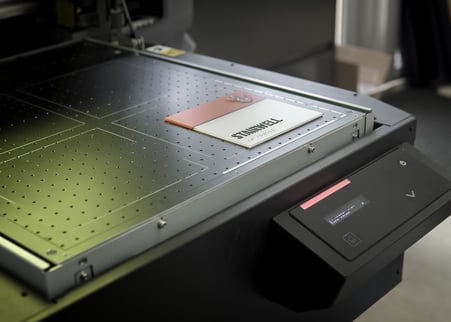
What used to be a separate component that could fail is now a permanent part of the sign. This technology ensures durability against constant use, cleaning, and curious hands. Every dot, arrow, and letter is fused into place, built to remain compliant for years to come.
The Mutoh gives us a way to create signs that are compliant, incredibly strong, and durable. And still beautiful enough to match your brand's style!
A Partnership for Uncompromised Quality
ADA compliance is a long-term promise. Signs must work not only on day one, but on day one thousand. When Braille dots fade or tactile letters peel, it’s your reputation at risk.
At FASTSIGNS Grand Rapids, we bring proven skill and advanced 3D printing together. Our process makes every element part of the sign itself, so nothing breaks away.
Choosing lasting signs means fewer fines, fewer failures, and more trust in your facility. It’s not just about avoiding a $75,000 penalty. It’s about knowing the job is done right — for good.